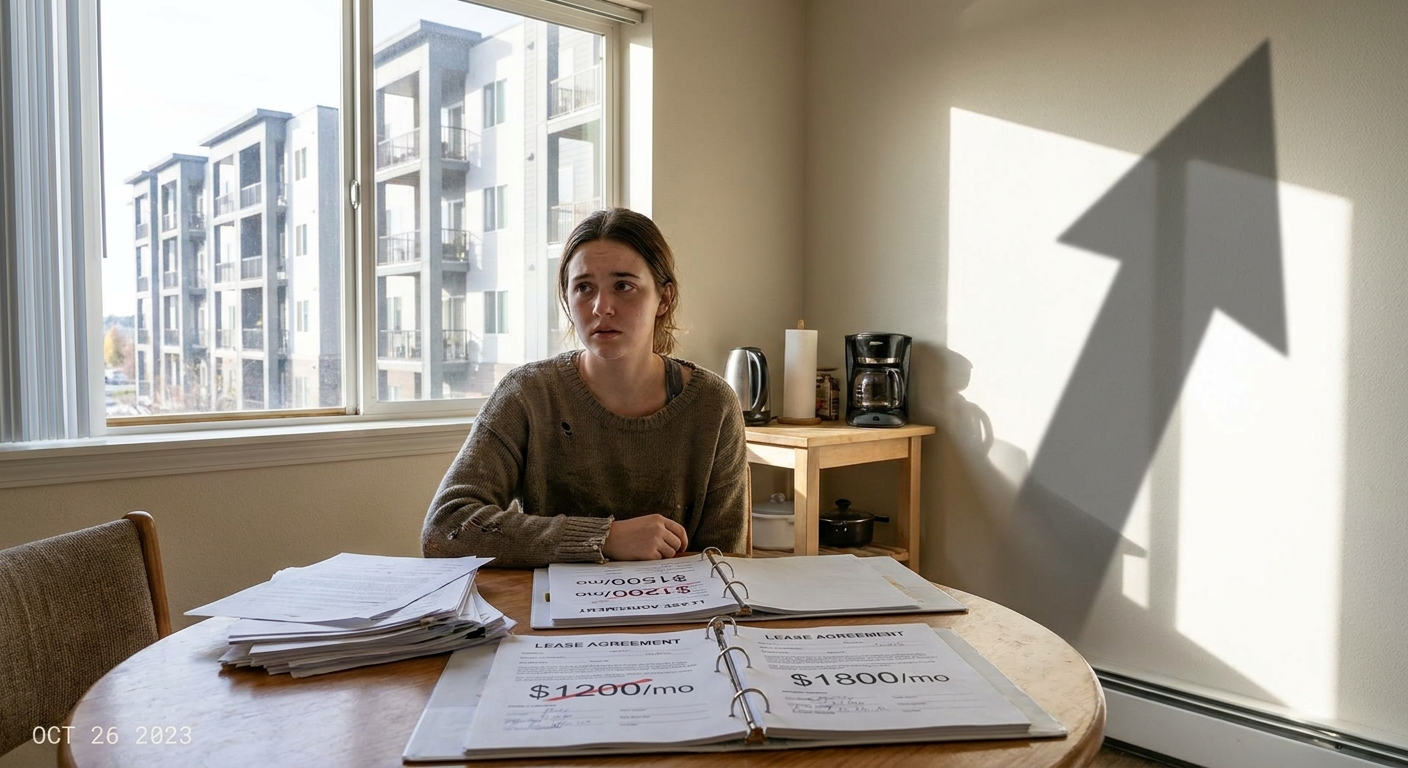
Headline inflation has cooled from its 2022 peak, but for many renters, the relief hasn’t shown up in their lease. Across the U.S., asking rents are up roughly 20% versus 2019, and in many Sun Belt and coastal cities, they’re still only a hair below the all‑time highs set in 2022–2023.
Why Your Rent Is Still High Even as Inflation Cools
If your wages haven’t kept pace, the gap is showing up as credit card balances, skipped savings, or second jobs.
This article unpacks why rents remain elevated, how interest rates and local policies quietly feed into your monthly payment, and what you can realistically do to protect your budget over the next year.
How the Rent Increase Gets Built—Step by Step
Think of your landlord as running a small business. Your rent has to cover:
Mortgage payment (if they owe on the property)
Property taxes
Insurance (often surging in weather‑risk regions)
Maintenance and repairs
Management and vacancy risk
When any of these costs spike, it puts upward pressure on your rent—even if your unit hasn’t improved at all.
1. Higher Mortgage Rates = Higher Landlord Costs
Many smaller landlords use mortgages, not cash. If they bought or refinanced after 2022, they’re paying:
- Around 6.5%–7.5% for a 30‑year fixed on a single‑family rental
- Even higher rates for certain investment property loans
Compare that to 3%–4% in 2020–2021. On a $300,000 loan:
- At 3.5%: ≈ $1,347/month in principal & interest
- At 7.0%: ≈ $1,996/month
That’s roughly $650 more per month that needs to be recouped—often through higher rent.
2. Property Taxes and Insurance Are Climbing
Local governments are reassessing property values after years of price gains. Even if tax rates don’t change, higher assessed values can mean:
- Tax bills up 10%–30% over a few years in some fast‑growing metros
Insurance costs have also surged, especially in:
- Hurricane‑prone states (Florida, Gulf Coast)
- Wildfire‑risk areas (parts of California and the West)
Double‑digit annual premium increases are not unusual. Again, these costs are passed through to renters.
3. Maintenance Backlog and Higher Labor Costs
The cost to maintain and repair buildings has risen:
- Construction materials up sharply since the pandemic
- Skilled labor (plumbers, electricians, HVAC) commanding higher wages
Landlords who delayed major work during COVID are now facing bigger repair bills, which show up in future rent hikes.
Why New Construction Hasn’t Solved the Problem
You may have seen news about a “wave” of new apartments being built. In some downtowns, this has slowed rent growth or even nudged prices down for high‑end units.
But there are three catches:
- Much of the new supply is luxury‑priced, not truly affordable middle‑market housing.
- Construction is concentrated in specific urban cores, leaving many suburbs and smaller cities still short on units.
- The overall U.S. housing market still faces an estimated 1.5–4 million home shortfall when you combine rentals and owner‑occupied units.
In cities that haven’t built enough, landlords have more leverage—and they know it.
Local Rules That Quietly Shape Your Rent
City and state policies can either ease or intensify rent pressures.
Zoning and Building Restrictions
Strict zoning that limits multi‑family buildings or mandates large minimum lot sizes makes it harder to add new housing.
Result: fewer units, higher competition, and landlords with more pricing power.
Rent Control or Stabilization
Some cities cap annual rent increases for certain buildings. This can protect current tenants but may also:
- Reduce incentives to build or maintain rental housing
- Lead landlords to raise rents more aggressively between tenants or on units not covered by rules
The impact is highly local. Understand your city’s specific rules, not just the headline.
Short‑Term Rental Rules (Airbnb, etc.)
In popular tourist areas, investors may convert long‑term rentals into short‑term units. That shrinks supply for residents.
Cities that crack down on short‑term rentals sometimes see more long‑term units return to the market, easing pressure at the margin.
How Rising Rent Translates to Your Household Finances
If your rent has gone from $1,600 to $2,000 in three years:
- That’s $400 more per month, or $4,800 more per year
- About 8% of your gross annual pay now going just to the increase
On a $60,000 salary (before tax), that’s roughly:
If you don’t adjust elsewhere, the math often shows up as:
- Growing credit card balances
- Paused retirement contributions
- Skipped medical or dental care
These are long‑term financial hits, not minor inconveniences.
What You Can Do in the Next 12 Months
You can’t change the macro conditions, but you can negotiate, plan, and reposition.
1. Time Your Lease Renewal Strategically
Start the conversation 60–90 days before your lease ends. Come prepared with:
- Data on comparable rents in your building or neighborhood
- Proof of on‑time payments and being a low‑maintenance tenant
If the landlord proposes a steep hike:
- Counter with a smaller, specific number (e.g., “I can handle a $75 increase, not $200”)
- Ask about a longer lease term (18–24 months) in exchange for a smaller increase
2. Consider Roommates or Smaller Units
For many renters, the fastest way to regain control is to change the unit, not just the rent:
- Moving from a 1‑bed to a studio or with a roommate can cut costs by $300–$800/month depending on the market
Run the math: even a $300 monthly reduction is $3,600 per year that can go to debt payoff or savings.
3. Audit the True Cost of Your Location
Beyond rent, consider:
- Commute costs (gas, tolls, transit)
- Parking fees
- Local taxes and fees
Sometimes a slightly higher rent in a walkable, transit‑served neighborhood can lower your overall monthly costs.
4. Build a “Rent Hike Buffer” Into Your Budget
Assume future rent increases of 3%–6% per year, depending on your city.
On a $2,000 rent:
- 3% increase = $60/month
- 6% increase = $120/month
Try to free up that amount now and divert it to savings or debt payoff. When the hike arrives, you’ll already be used to the smaller budget.
5. Watch for Local Assistance and Tax Credits
Depending on your income and location, you may qualify for:
- State or city renter tax credits
- Emergency rental assistance programs
- Utility bill support for low‑income households
These programs are often under‑used because people don’t know they exist. Check your city and state housing agency websites.
When It’s Time to Explore Leaving Your Market
In some metros, rents and home prices have simply outrun local wages. If you’re perpetually spending 40%+ of your gross income on housing and seeing no realistic path to relief, you may need to consider:
- Moving to a more affordable suburb or exurb
- Relocating to a different metro where rent‑to‑income ratios are healthier
This is a major life choice, but treating housing as a fixed, unchangeable fact can trap you in chronic financial stress.
The Bottom Line for Renters
Your rising rent is not a personal failure; it’s the visible symptom of deeper forces—interest rates, housing shortages, local policies, and global supply costs.
You can’t fix those overnight. But you can:
- Understand how the economics work
- Negotiate from a position of information
- Make deliberate trade‑offs about space, location, and roommates
- Build buffers against future hikes
In a market where shelter costs are outpacing paychecks, the households that stay financially afloat are the ones that respond early, not after the renewal notice shows up.