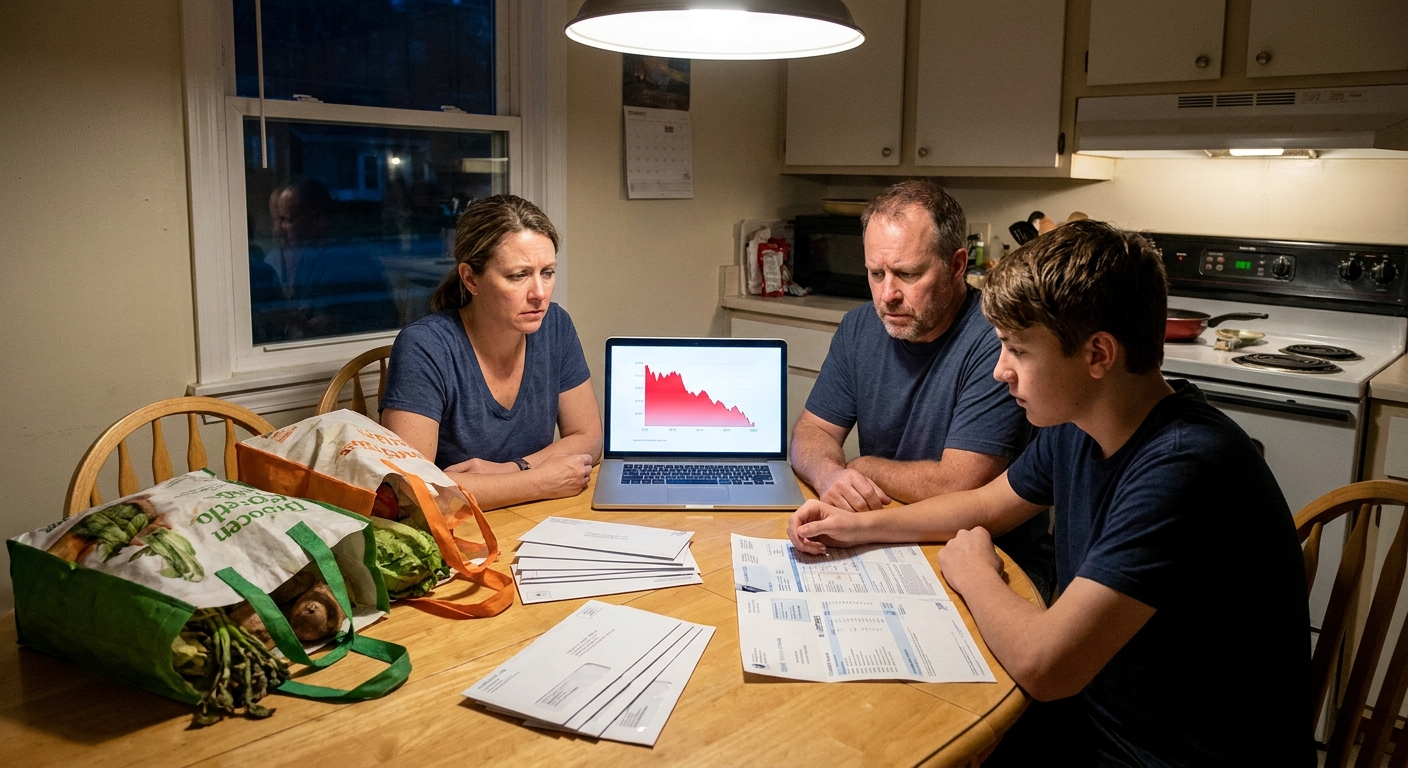
Stock markets have lurched up and down in recent months, with major indexes often moving 1–2% in a single trading day. The S&P 500 has repeatedly swung several hundred points within weeks, while the tech‑heavy Nasdaq has seen even sharper intraday moves. For many households, the big question isn’t what traders think — it’s what this volatility means for paychecks, mortgages, 401(k)s, and day‑to‑day budgets.
Markets Are Swinging. Here’s Why Your Bills Might Be Next
This explainer walks through how market swings connect to your money, what’s driving the turmoil, and what practical steps you can take now.
What’s Actually Moving?
1. Stock Indexes
The three big benchmarks you hear about most:
- S&P 500 – tracks 500 large U.S. companies; a broad snapshot of corporate America.
- Dow Jones Industrial Average (Dow) – 30 large, established firms; more old‑line industries.
- Nasdaq Composite – thousands of stocks, heavily weighted toward tech and growth companies.
When you hear that “the market” is down 2% in a day, that usually means one or more of these is falling. A 2% drop in the S&P 500 can erase hundreds of billions of dollars in paper wealth.
2. Bond Yields
Bond markets move alongside — and sometimes ahead of — stocks. The 10‑year U.S. Treasury yield, a key benchmark, has spent much of the recent period between 3.8% and 4.8%. That movement matters because this single number heavily influences mortgage rates, auto loans, and business borrowing costs.
When yields rise, borrowing generally gets more expensive. When they fall, borrowing becomes cheaper but may signal concerns about growth.
Why Markets Are So Nervous
Multiple forces are hitting at once:
1. Interest Rates and the Federal Reserve
The Federal Reserve (the Fed) has pushed its federal funds rate into the 5%–5.5% range to fight inflation that recently ran as high as 8%–9% year‑over‑year and remains above its 2% target. Markets are constantly trying to guess:
- How long will rates stay high?
- Will the Fed raise again, hold, or start cutting?
Each new inflation report, jobs number, or Fed speech can move expectations — and therefore stocks and bonds — sharply.
What it means for you:
- Higher Fed rates push up credit card APRs (often 20%–30% now) and keep mortgage rates elevated.
- Savers can earn more on cash (4%–5% on some online savings accounts and CDs), but borrowers pay more.
2. Inflation and Corporate Profits
Inflation has cooled from its peak but remains sticky in key categories:
- Grocery prices remain roughly 20%+ higher than in 2019 for many staples.
- Rents and home insurance premiums have jumped.
- Gas prices still swing widely, adding uncertainty.
Companies are caught between higher costs (wages, materials, shipping) and consumers who are pushing back on higher prices. Markets are pricing in whether profits can keep growing when households are stretched.
What it means for you:
- Even if inflation slows from 8% to 3%, your cost level is already higher; prices don’t go back down, they just rise more slowly.
- Market worries about profits can hit your retirement accounts even as your living costs stay elevated.
3. Growth Fears and Recession Risks
Investors are watching for signs that higher rates will tip the economy into recession:
- Slower hiring or rising layoffs.
- Falling consumer spending.
- Weak earnings forecasts from big retailers, manufacturers, and banks.
Markets often move before the economy clearly turns. That’s why you may see stocks falling while job numbers still look relatively solid.
How Market Swings Touch Your Household Directly
1. Retirement Accounts and College Savings
If you have a 401(k), 403(b), IRA, or 529 plan invested in stock or bond funds, you’re exposed to market moves.
- A 10% decline in the S&P 500 can cut a $200,000 retirement portfolio by $20,000 — on paper.
- Bond funds can also fall when rates rise, even though they’re considered “safer” than stocks.
Key point: Short‑term drops are not the same as permanent losses unless you sell.
2. Home Loans and Refinancing
Mortgage rates track longer‑term bond yields more than the Fed’s short‑term rate, but the two move in the same general direction. In recent months:
- 30‑year fixed mortgage rates have hovered around 6.5%–7.5%, versus under 3% in 2020–2021.
On a $400,000 loan:
- At 3%, the principal-and-interest payment is about $1,686/month.
- At 7%, that jumps to about $2,661/month.
That’s nearly $1,000 more each month, or almost $12,000 a year, erased from a household budget.
3. Credit Cards and Personal Loans
Because most credit card APRs float above the Fed rate, repeated rate hikes have pushed many cards into the 20%–30% range. A $5,000 balance at 25% APR, if you only make minimum payments, can cost you thousands of dollars in interest and take years to clear.
4. Jobs, Wages, and Hiring
When markets fall sharply, companies often respond by:
- Freezing hiring.
- Slowing wage increases.
- Cutting bonuses or hours.
Even if you’re not invested in markets, corporate caution driven by falling stock prices can affect job security and income growth.
What You Can Do Right Now
1. Separate Your Time Horizons
- Money you need in 1–3 years (emergency fund, near‑term home down payment, tuition) should be in cash, high‑yield savings, or short‑term CDs — not stocks.
- Money for 10+ years out (retirement) can stay largely in diversified stock funds, even through big swings.
This prevents market volatility from derailing short‑term goals.
2. Stress‑Test Your Budget
Go line by line through your monthly expenses and ask:
- What if my rent or property taxes rise another 5–10% next year?
- What if my interest costs on credit jump by 2 percentage points?
- Could I handle one paycheck delay or a temporary job loss?
Adjust now by:
- Building a 3–6 month emergency fund.
- Prioritizing high‑interest debt repayment.
- Delaying big discretionary purchases if your job or industry is unstable.
3. Capture Higher Yields, Safely
High rates punish borrowers but reward savers:
- Compare FDIC‑insured online savings accounts and CDs; yields of 4%–5% are common.
- Consider U.S. Treasury bills (4‑, 13‑, 26‑week) which you can buy directly at TreasuryDirect.gov.
Keep emergency funds easy to access, but don’t leave large balances earning 0.01%.
4. Check Your Investment Mix
Without giving personalized advice, here are general principles to review:
- Avoid concentrating in a single stock, sector, or theme.
- Understand what percentage of your retirement portfolio is in stocks vs. bonds vs. cash.
- Rebalance periodically so that one booming sector doesn’t dominate your holdings.
If you’re uneasy, consider speaking with a fee‑only fiduciary adviser who is legally obligated to put your interests first.
5. Don’t Let Headlines Dictate Every Move
Markets often swing more than the underlying economy. Because bad news hits screens instantly, there’s a strong temptation to react emotionally.
Instead:
- Set clear goals (retirement age, college funding, mortgage payoff timeline).
- Make a written plan for saving and investing.
- Review it on a schedule (quarterly or annually), not every time the Dow drops 500 points.
Bottom Line for Households
Market volatility is not just a Wall Street drama; it shows up in your mortgage rate, credit card bill, retirement account balance, and sometimes your paycheck. Higher interest rates, persistent inflation, and uncertainty about growth are driving today’s swings.
You can’t control the headlines, but you can:
- Protect near‑term money from risk.
- Reduce expensive debt.
- Take advantage of higher savings yields.
- Keep long‑term investments diversified and disciplined.
The goal is not to predict every market move. It’s to make sure the next swing doesn’t knock your household finances off course.